How Ports, Airports & Trains Reprice Greek Property
Greece’s lifestyle premium is real — but transport and port links, not views, often reprice rental yields. Prioritise transfer minutes, seasonal schedules and local infrastructure.
 The Yieldist
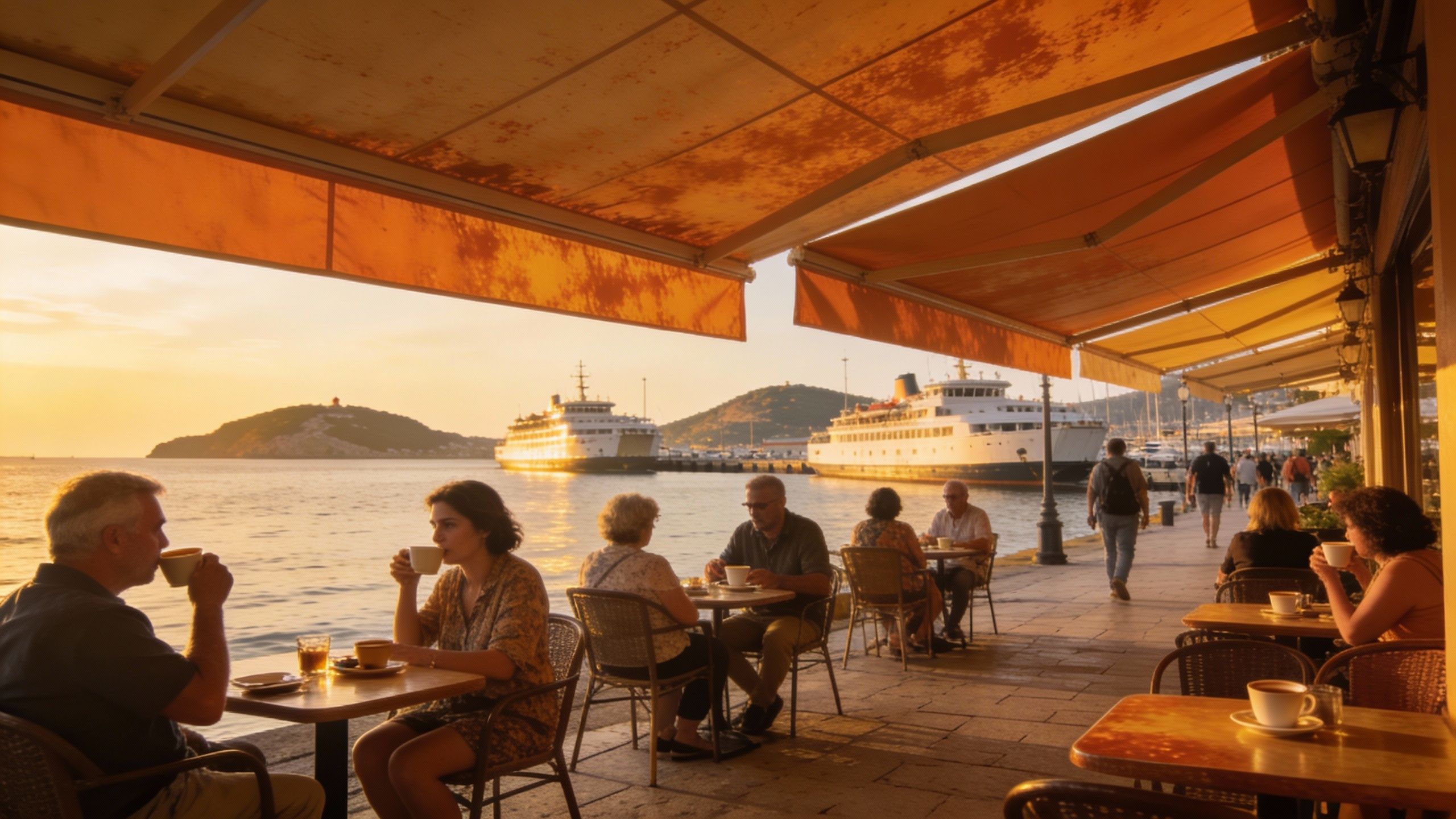
Imagine waking up to a short walk between a kafeneio serving thick espresso and a coastal promenade where ferries leave on the hour. In Greece that scene isn’t only on postcards — it’s the everyday rhythm in neighbourhoods from Piraeus to Paros. That easy movement, between islands, airports and cities, changes how properties perform: proximity to a reliable ferry or a frequent regional flight often matters more for rental demand than a sea view. Understanding how airports, ports and rail projects reprice neighbourhoods is the difference between buying a holiday story and buying a repeatable income stream.
Living the Greece lifestyle: senses, seasons and streets

Greece moves in daylight and festival time: markets hum in the morning, tavernas fill after siesta, and August weekends empty cities as locals take island holidays. Athens has a compact, layered urbanity — coffee on Ermou, art in Metaxourgeio, late dinners in Koukaki — while Thessaloniki feels like a long, sociable boulevard that eats late and talks louder. On islands like Naxos and Paros you trade 24/7 services for seasonal intensity: months of full-bookings followed by quiet winters that reward tenants who value authenticity over constant turnover.
Athenian neighbourhoods that mean different lives
Walk from Kolonaki to Pangrati and you feel how micro‑location governs daily choices: Kolonaki’s cafés and galleries suit owners seeking urban permanence, Pangrati’s parks and smaller flats suit long‑stay tenants and remote workers. Proximity to Athens International (Eleftherios Venizelos) — which posted strong passenger growth in recent years — also reshapes demand in southern suburbs; regular, reliable airport links attract short‑break travellers and business tourists who prefer quick transfers over inner‑city glamour. For investors, a 20–30 minute transfer time often converts to higher occupancy during shoulder seasons.
Island life: why a port matters more than a view
On islands, the narrative buyers love — sunset vistas and boutique hotels — is only part of the cashflow equation. Reliable ports and frequent ferry connections (and increasingly, regional flights) determine seasonal length and repeat bookings. Islands with robust port infrastructure and year‑round ferry schedules show stronger shoulder‑season occupancy and higher annualised yields. Recent tourism data shows higher overnight stays in regions with better connectivity, making port adjacency a practical proxy for rental resilience.
- Lifestyle highlights that directly affect property demand:
- Morning market at Varvakios (Athens) — feeds kitchen‑equipped rentals and chef‑tenants.
- Ferry hub at Piraeus — short transfers to the Cyclades increase off‑peak bookings.
- Thessaloniki waterfront — year‑round student and local rental demand.
- Regional airport links (e.g., Mykonos, Santorini, Chania) — lift nightly rates during peak months.
Making the move: infrastructure that rehabs returns
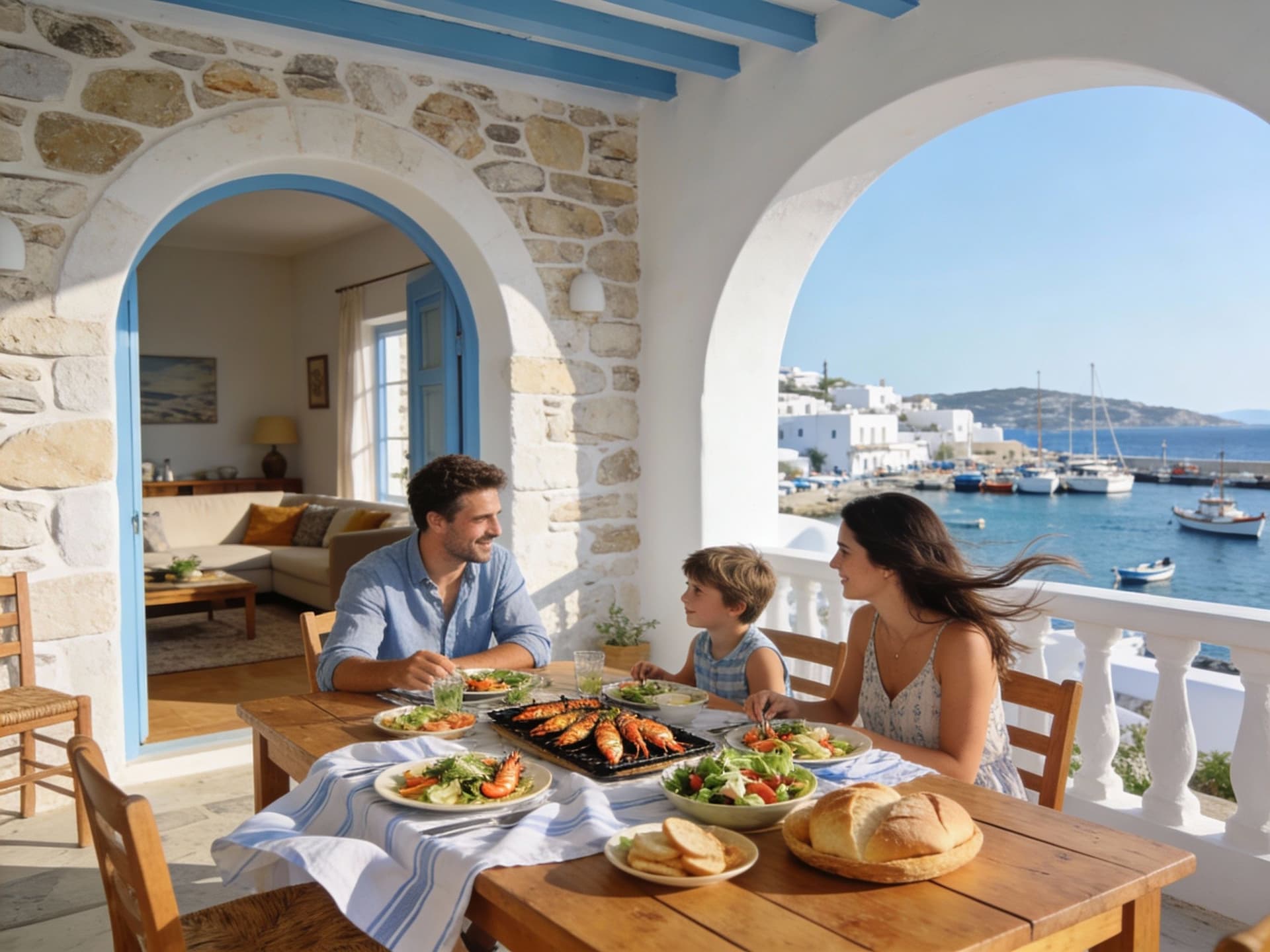
Dream lifestyle sells the idea; transport upgrades sell the cashflow. Greece’s recent airport modernisations and private concessions (notably Fraport’s regional network) materially improved regional access, shortening transfer times and expanding year‑round demand. Investors should measure distance not in kilometres but in transfer minutes to the nearest port, airport or high‑frequency bus or rail line — and price properties accordingly. Where new or expanded links are planned, prices often reprice ahead of completion as buyers anticipate easier access.
Property types and what they deliver
New‑build apartments near transit nodes sell operational simplicity: modern plumbing, insulation and access increase tenant turnover efficiency and reduce capex. Restored neoclassical flats in central Athens command lifestyle premiums but often have higher maintenance and irregular rental seasons. On islands, courtyard houses with easy port access out‑perform isolated villas in total annual occupancy. Match building type to target tenant: digital nomads and long‑stays want reliable internet and commuter access; holiday lets need fast transfer times and luggage‑friendly layouts.
How local experts change the equation
1) Local agents with proven cross‑season management can benchmark realistic occupancy rather than peak rates; 2) Maritime and airport schedules change annually — agencies who monitor port timetables and flight frequencies protect you from seasonal over‑optimism; 3) Renovation partners familiar with island logistics control build timelines and cost‑overrun risk.
Insider knowledge: what expats wish they'd known
Expat returns often start with romance and end with logistics. Buyers I spoke to wished they'd checked ferry frequencies, municipal plans for port expansion, and whether an island had seasonal road access for contractors. Over‑reliance on peak summer rates can produce misleading gross yields: cities and well‑connected islands yield steadier net returns. Recent reporting also warns of social pushback where tourism compresses local affordability — a reputational risk for owners dependent on year‑round goodwill.
Cultural cues and daily integration
Greek social life centres on place-based rituals: market mornings, late group dinners, and neighbourhood festivals. Investing near a community square or municipal market creates rental appeal to tenants seeking local life rather than sterile holiday flats. Learning basic Greek courtesies and respecting building traditions speeds homeowner acceptance and simplifies property management. Agencies that broker community introductions — local cleaners, port contacts, cafe owners — accelerate integration and protect occupancy.
Long‑term: how infrastructure drives neighbourhood transformation
Infrastructure projects reprice ranges in predictable ways: an airport concession or a reliable ferry line expands the effective market catchment and compresses vacancy. Recent Bank of Greece tourism and receipts figures show increasing visitor flows into regions with upgraded access — a leading indicator for appreciation potential. That said, rapid price moves can outrun local incomes and provoke regulatory or community responses, so stress‑test occupancy and model 50–60% of peak rates for conservative yield estimates.
- Checklist: immediate steps before you bid
1) Verify transfer minutes to the nearest port/airport in low season; 2) Request historical occupancy and winter rates from local managers; 3) Check municipal plans for port/airport upgrades or restrictions; 4) Quote logistics costs for island renovations and factor them into initial capex; 5) Ask agencies for tenant profiles by month, not just peak ADR (average daily rate).
Greece can be both a life‑change and a dependable asset — if you respect how movement shapes money. Start with the lifestyle you want, then map that desire onto transport reality: short transfer times, year‑round access and local infrastructure are the levers that turn charm into yield. Work with agencies that read schedules and municipal plans as well as decor trends; they’re the ones who translate mornings at the market into months of steady income. When infrastructure and lifestyle align, Greece stops being merely a dream and becomes a repeatable return.
The YieldistDanish relocation specialist who moved to Cyprus in 2018, helping Nordic clients diversify with rental yields and residency considerations.
Related Articles
More insights that might interest you
 Villa Curated
 Villa Curated
 The Yieldist


