Buy When Italy Slows: Off‑Season Advantage for Yield
How buying in Italy’s low season gives negotiation advantage and steadier net yields — use neighbourhood data, local experts and off‑season stress tests.
 The Yieldist
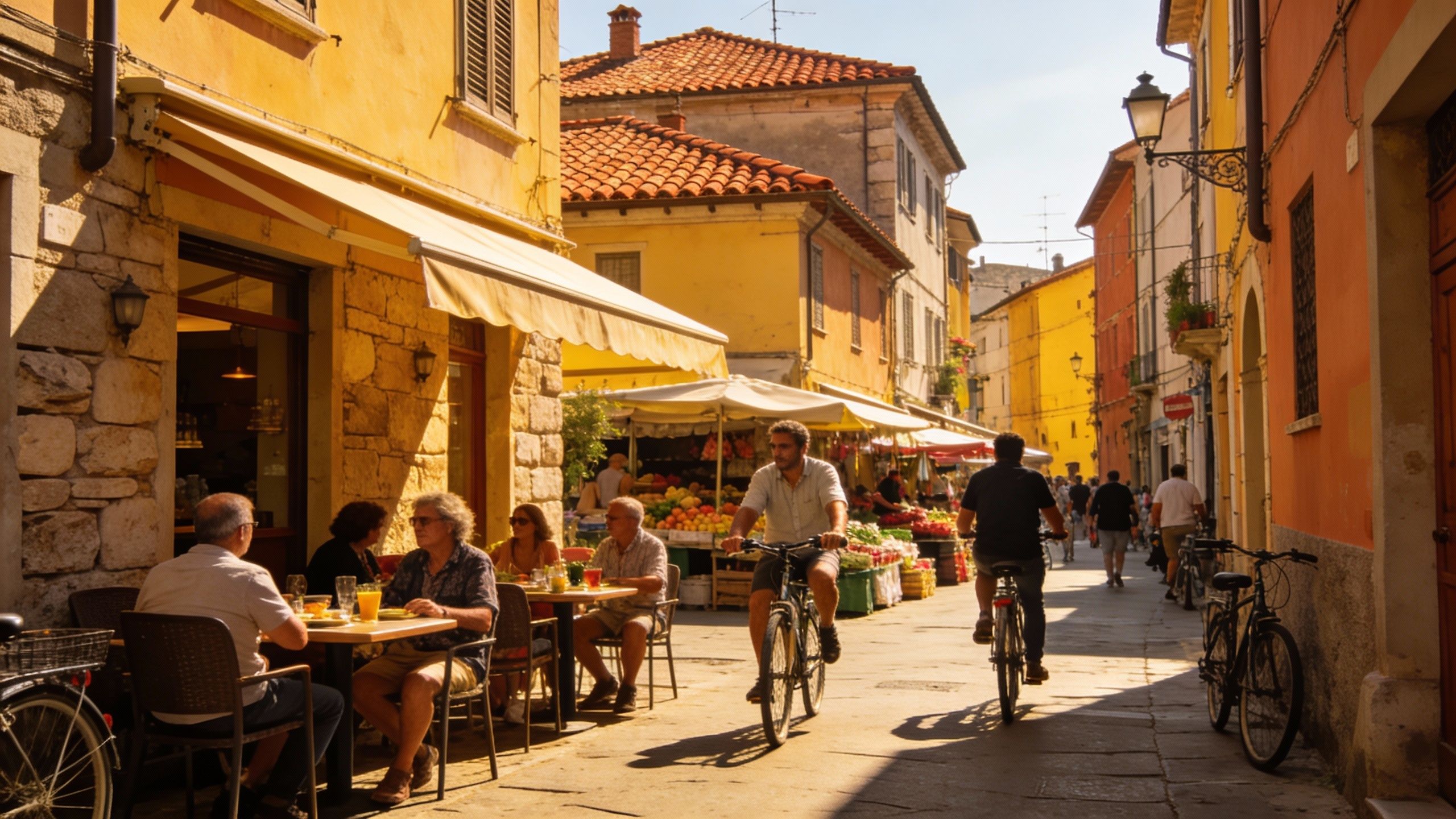
Imagine an autumn morning in Trastevere: espresso at a corner bar, damp cobbles steaming, and a local arguing the price of chestnuts at a market stall. Italy sells itself through these small, daily rituals — piazzas that double as living rooms, neighbourhood cafes with regulars who remember names, and seaside promenades that empty out in October. But beneath the romance there is a practical rhythm: seasonality reshapes demand, negotiation power and rental economics. If you treat property as an asset, the months when Italy’s tourist lights dim can be the most advantageous time to buy.
Living the Italy lifestyle

Italy’s appeal is sensory and local. Morning markets set the tempo for neighbourhood life, aperitivo hour signals a social reset, and public transport routes — from Genoa’s winding tramlines to Milan’s efficient metro — structure weekly routines. For an international buyer, the everyday experience depends on which Italy you choose: alpine order in Bolzano, chaotic charm in Naples, measured design in Milan, or slow coastal living in Puglia. That variety is an investor’s friend: different lifestyles map to different tenant pools and yield profiles.
City pulse: Milan, Rome, Bologna
Milan moves like a global capital — fashion weeks, finance, and now a tax regime drawing wealthy newcomers. Rome mixes tourism with long-term residency pockets: neighbourhoods such as Prati and Nomentano are quieter residential bets, while Trastevere remains tourist-magnet adjacent. Bologna and university cities like Pisa or Padova skew strongly toward rental demand for students and young professionals, often delivering steadier occupancy than holiday-driven coastal spots. Recent reports show price increases in Rome and continued demand in northern cities, underscoring urban resilience even when visitor numbers fluctuate.
Coast and countryside: Puglia, Liguria, Tuscany
Seaside towns and rural hilltop villages trade high season premiums for long low-season stretches. Regions like Puglia and Liguria fetch tourist premiums in summer but see dramatic occupancy drops in winter, affecting short-let economics. Immobiliare.it’s national data shows regional price dispersion — Trentino Alto Adige averages higher €/m² while Calabria and southern regions remain significantly lower — which matters when calibrating yield expectations against purchase price. For lifestyle buyers seeking slow living, the trade-off is lifestyle authenticity versus seasonal income volatility.
- Morning markets in Campo de' Fiori (Rome); Aperitivo streets around Navigli (Milan); Seafood markets in Porto Empedocle (Sicily); Truffle hunts and harvest weekends in Langhe; Sunset promenades on Viareggio seafront; Train connections: Milan–Florence–Rome corridor.
Making the move: practical considerations

Italy’s housing cycle is idiosyncratic: national prices rose modestly through 2024 according to ISTAT, but gains are uneven across regions and property types. New-builds expanded faster than existing stock, and sales volumes moved differently by quarter — all of which affects liquidity and negotiation leverage. For the buyer who times visits and offers to low-demand months, there’s measurable advantage: motivated sellers, slower broker pipelines, and clearer data on net yields versus seasonal gross rents. Translate seasonal occupancy into conservative underwriting assumptions rather than optimistic summer peaks.
Property types and how they map to lifestyle
Historic centro apartments sell the Italian dream but often come with small kitchens, noise and renovation headaches — they suit owner-occupiers focused on lifestyle and capital appreciation. New builds or restored townhouses in university cities typically offer higher rental appeal and lower capex risk for landlords. Villas and farmhouses command a premium for leisure use but must be stress-tested for off-season maintenance and lower long-term rental demand. Match a property type to the tenant profile you’ll underwrite: students, permanent expat renters, seasonal holiday guests, or multi-family long lets.
Working with local experts
- 1) Use a local agent familiar with municipal quirks (zoning, historical restrictions) to avoid surprise refusals for renovations. 2) Ask for rent roll history and seasonal occupancy rates — data, not anecdotes — before pricing rental forecasts. 3) Engage a notary early to outline transfer taxes and registry costs; Italy’s notarial role is decisive and non-negotiable. 4) Retain a bilingual property manager or lettings agent who handles winter maintenance, seasonal turnovers and cross-border tax reporting.
Insider knowledge: what expats wish they'd known
Expats often romanticise Italy but underprepare for local pace and bureaucracy. Simple tasks — opening utilities, registering residency, or procuring building permits — can take longer than expected. Cities undergoing regeneration (Genoa, parts of Milan) present opportunities where public investment lifts long-run values; the FT has tracked these shifts and related infrastructure projects. The best buyers combine patience with local counsel and a conservative underwriting approach to seasonal income assumptions.
Cultural integration and day-to-day life
Language matters for neighbourhood integration: smaller towns reward even basic Italian with quicker social acceptance and better service. Expect community ties to influence tenancy stability — long-term tenants often come through local networks rather than platforms. For families, school catchment and healthcare access direct neighbourhood choice as much as aesthetics. Social calendars — patron saint festivals, weekly markets, seasonal food traditions — are not just pleasant extras; they shape when properties are tenanted and when maintenance windows are realistic.
Long-term lifestyle and portfolio considerations
View an Italian property as part of a diversified portfolio: regional price dispersion and seasonal cashflow patterns mean correlation with other assets is imperfect. Use conservative cap-rate stress tests that apply off-season occupancy and maintenance spikes; recent national data shows modest annual price growth but faster gains for new builds, which can guide allocation between renovation plays and turnkey purchases. Local tax incentives and residency rules (flat-rate regimes for high-net-worth residents) change the after-tax return profile and should be modelled into yield projections.
- Key takeaways: - Time visits and offers in shoulder seasons for negotiation leverage. - Match property type to tenant pool: students, locals, expats, or tourists. - Demand data (rent rolls, occupancy history) beats glossy staging. - Factor winter maintenance, utilities and low-season vacancy into returns. - Use local agents, bilingual managers and a notary to eliminate surprises.
Conclusion: Italy sells a lifestyle but rewards investors who see beyond summer postcards. If you want daily markets, neighbourhood rituals and a deep sense of place, plan for the seasons that shape occupancy and negotiate with seasonal timing on your side. Start with neighbourhood-level data, a local agent who understands non-tourist tenant pools, and stress-tested yield models that assume pragmatic off-season performance. Do that, and the cobbles and cafes become not just reasons to buy, but reasons your purchase performs.
The YieldistSwedish financier who guided 150+ families to Spanish title deeds since relocating from Stockholm in 2012, focusing on legal and tax implications.
Related Articles
More insights that might interest you
 Villa Curated
 Villa Curated
 The Yieldist


