
Malta’s Verdant Coast: Lifestyle Truths & Local Market Reality
Malta’s limestone lanes and coastal green pockets offer verdant, low‑impact lifestyles—but rising prices and micro‑neighbourhood quirks mean timing and local expertise matter.
 Moss & Hearth
Imagine waking to the smell of freshly baked pastizzi, then walking a limestone lane toward a cliff-top café where fishermen mend nets and toddlers chase pigeons. Malta moves at a human scale: sunlit terraces, narrow streets dusted in ochre, and an intimate coastline that folds between headlands. For international buyers drawn to green living and coastal forests, Malta’s compactness means every day feels curated—short drives to marine reserves, evening swims at hidden coves, and a surprising abundance of edible gardens tucked behind stone walls. But the romance meets reality: prices and demand have been rising, so falling in love with the place should be paired with smart, place-aware buying.
Living the Malta life: scent, stone and sea
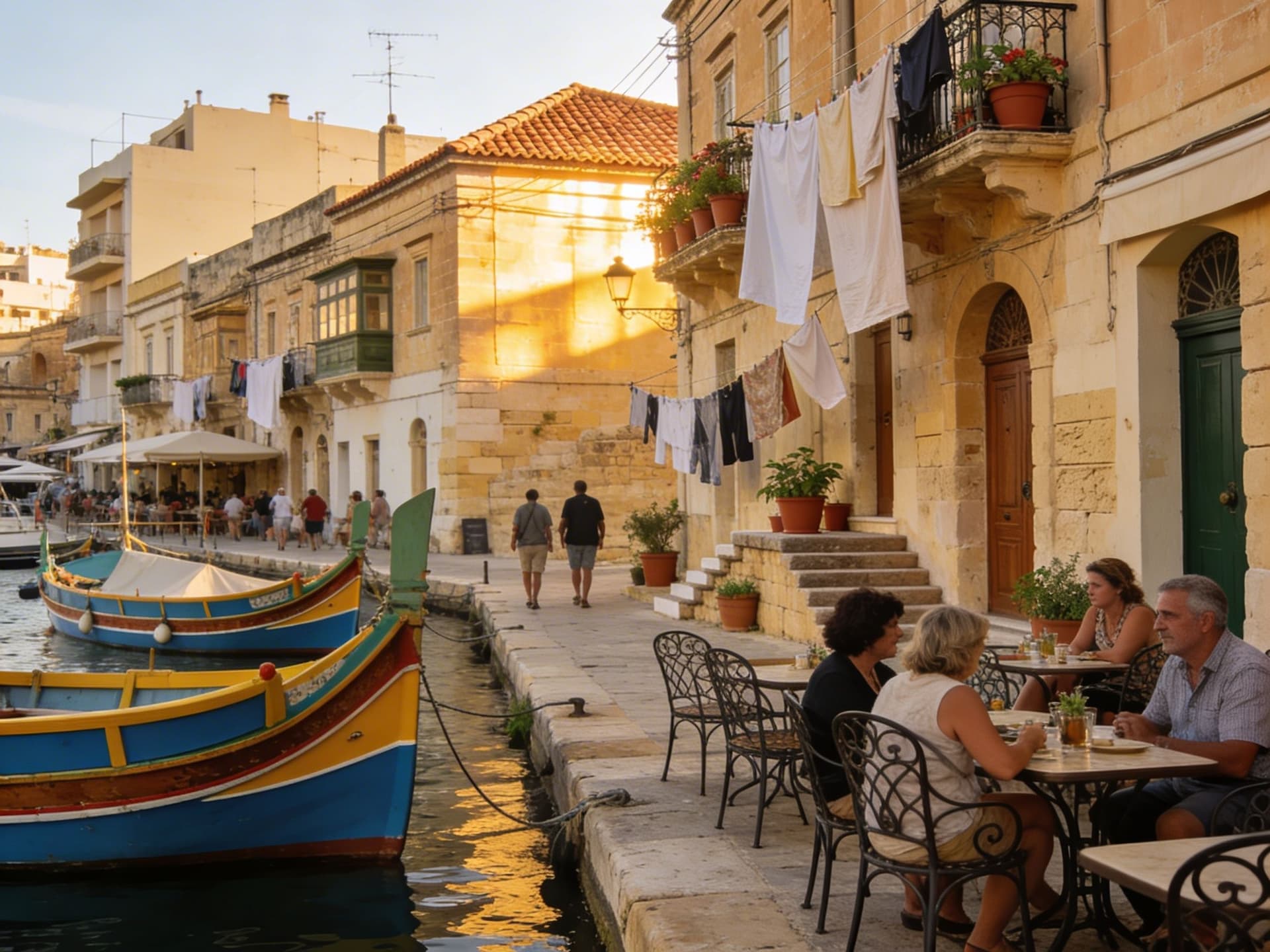
Morning in Valletta is theatrical: church bells, coffee steam, and terraces stacked like memory. Sliema and St Julian’s hum with seaside promenades and international cafés, while the south—Marsaxlokk and its painted luzzu boats—keeps a slower, more traditional rhythm. Gozo offers a softer tempo: rugged fields, family-run bakeries, and houses of character framed by fig trees. For buyers who value biodiversity and outdoor life, Malta’s patchwork of micro-neighbourhoods gives you options from urban roof-gardens to coastal plots buffered by maquis scrub.
Valletta, Cottonera and the harbour fringe
Valletta’s stone streets are a daily theatre of history and hospitality; think tiny art galleries, boutique delis and rooftop terraces that sip sunset over the Grand Harbour. Nearby Cottonera (the Three Cities) is woody and community‑anchored — narrow lanes, pocket gardens and fishermen’s cafés where neighbours know one another’s children. Properties here are often restored townhouses and apartments with thick limestone walls that keep interiors cool in summer and cosy in winter. If you want to live where history feels lived‑in, these districts offer both sensory richness and the convenience of central amenities.
Sliema, St Julian’s and the promenade life
Sliema’s promenades and St Julian’s bay are for people who like their coffee with sea air and choice: seaside flats, modern apartments and lively dining. Expat communities cluster around certain streets and cafés—think Tower Road in Sliema for morning runs and terraza culture after work. These areas are more cosmopolitan and busier in summer, which means better services, coworking spots and international schools nearby. For buyers prioritizing walkability and social life, the tradeoff is paying a premium for the view and convenience.
Making the move: what the market actually looks like
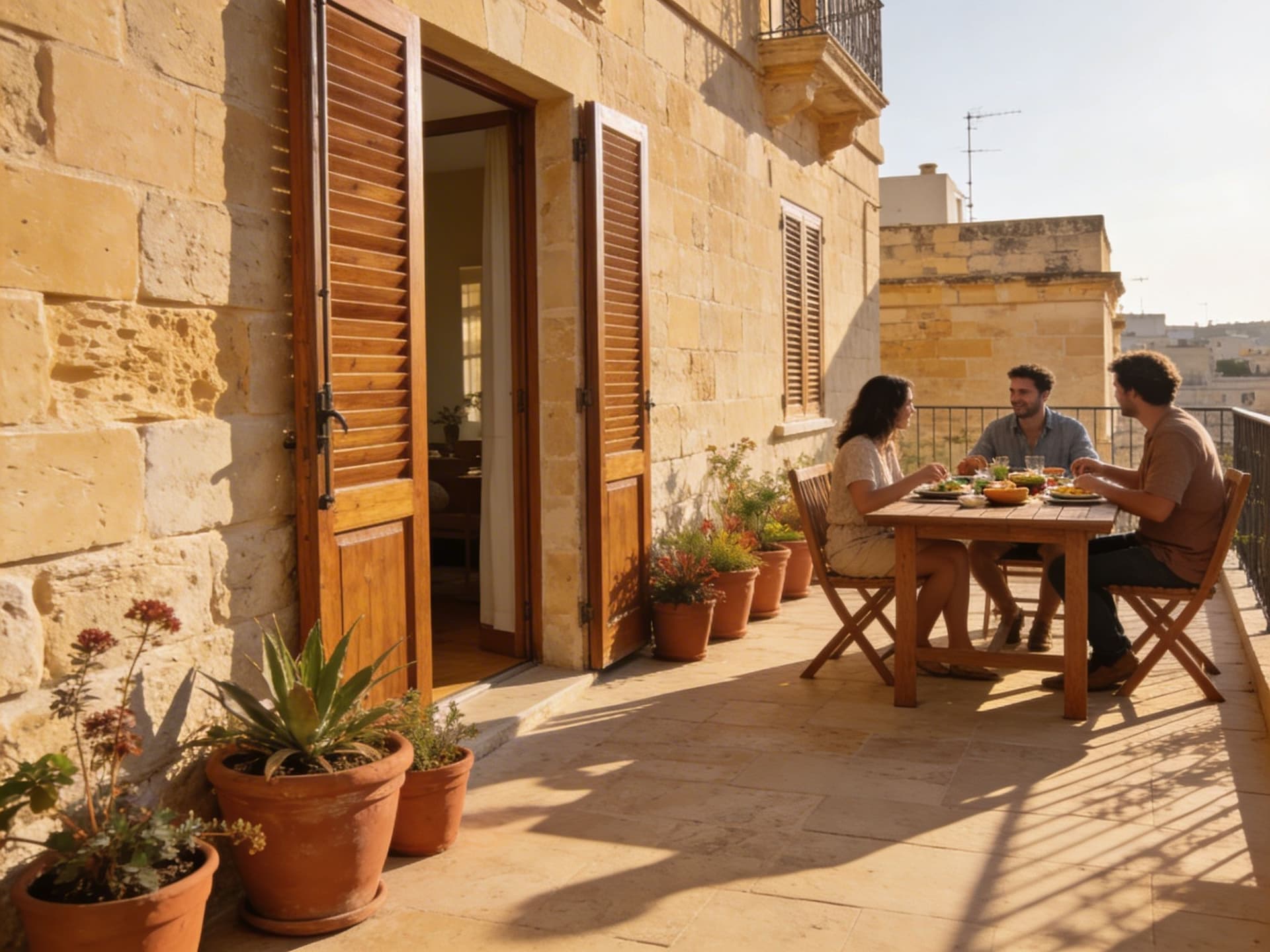
Malta’s property market is compact and active—small in geography but big in demand. Official data shows notable year‑on‑year growth in recent quarters, with apartment and maisonette prices rising and steady quarterly increases recorded by the NSO. That means choices that fit a green, outdoor lifestyle exist, but they require timely action and an eye for micro‑value: a stone house with a private courtyard in an overlooked village can offer more biodiversity (and privacy) than a high‑rise sea view.
Property styles that suit a verdant coast‑life
Think beyond the postcard villa: maisonettes with roof terraces, restored houses of character with inner courtyards, and modern apartments fitted for energy efficiency all work for green living. Thick Maltese limestone walls provide natural thermal mass, reducing cooling needs, while many renovated homes integrate rainwater harvesting and shaded courtyards to extend outdoor seasons. If you want garden space, look for properties in Gozo or the quieter southern villages where plots and terraces are more common than in the dense harbour towns.
Working with local experts who speak landscape
- 1. Choose an agent who knows micro‑neighbourhoods and can point to local community projects (orchards, coastal restoration, green roofs). 2. Ask for energy and water usage records, not just floor plans—these numbers show real living costs. 3. Prioritise sellers who have done sympathetic restorations (lime mortar, recycled timber, passive shading). 4. Check for permitted outdoor alterations and any zoning that protects adjacent natural areas. 5. If you plan to rent, confirm rental licensing zones and short‑let restrictions before bidding.
Insider knowledge: what expats wish they'd known
The surprises for many new arrivals are small and sensory: how wind funnels through a valley in winter, how terraces become living rooms in summer, and how neighbours still exchange fruit from rooftop gardens. But practical surprises matter too—rising prices and competition mean buying windows can be short, and not every listing tells you about shared roof rights or sea‑access easements. Listening to locals—cafè owners, the municipal clerk, gardeners—usually reveals what paperwork will miss.
Cultural rhythms that shape where you live
English is widely spoken, which eases daily life and transactions, but Maltese culture prizes community rituals: festa nights, market Saturdays, and family dinners that can define a neighbourhood’s tempo. If you’re after solitude and nature, target hamlets and Gozo; if you want social evenings and international meetups, Sliema or St Julian’s keep a lively calendar. Remember: neighbourhoods change subtly with the seasons—summer vibrancy softens into quiet autumns, which is often when locals do repairs and restorations.
- 1. Visit out of season (autumn or winter) to feel everyday life, not the tourist push. 2. Walk the streets at different times—mornings, late afternoons and festa evenings—to judge sound and social life. 3. Ask neighbours about water pressure, prevailing winds, and sun across courtyards before committing. 4. Factor in modest conversion costs to retrofit renewable features (solar thermal, PV-ready roofs, greywater systems).
Malta is a place that rewards slow attention: the house you buy often becomes a lived geography of seasons, neighbors and small, regenerative practices. If you want a verdant coastal life with authentic community, start with lifestyle scouting—cafés, coves, and community gardens—and then bring in local experts to check legal, municipal and technical details. The right agency will match you to micro‑neighbourhoods that fit both your values and your daily rhythms, turning a first visit into a home you’ll love long after the pastizzi are gone.
Moss & HearthNorwegian market analyst who relocated from Oslo to Provence; guides investors with rigorous portfolio strategy and regional ecological value.
Related Articles
More insights that might interest you
 Villa Curated
 The Yieldist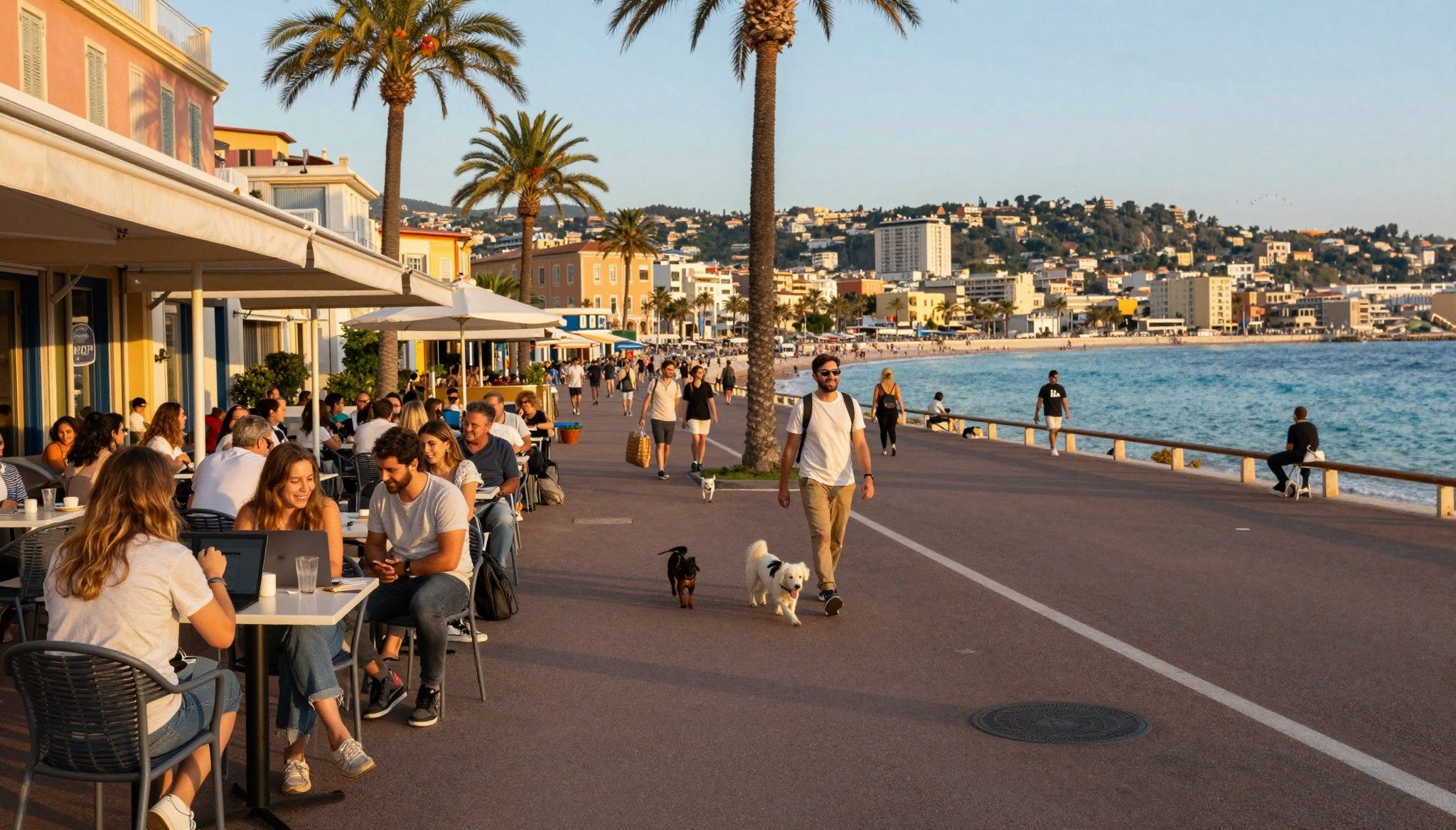
 MoveSettleGo
