Italy: Where Lifestyle Frequencies Drive Rental Returns
Italy’s lifestyle creates rental demand, but yields vary sharply by micro-location, property type and regulation—use local data, tax checks and scenario cashflows.
 The Yieldist
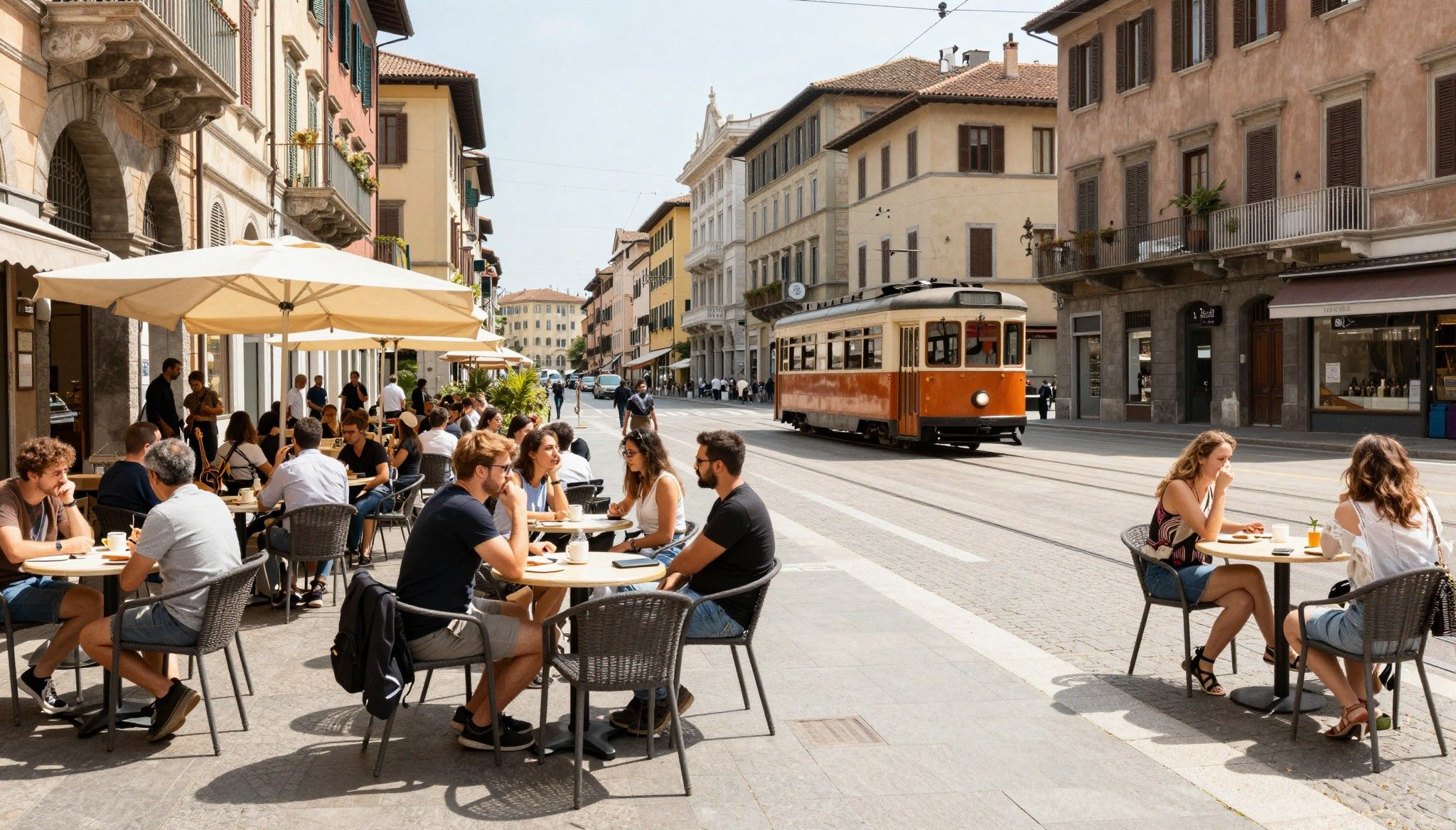
Imagine sipping a morning espresso at a narrow table on Via dei Coronari in Rome, then cycling past a market stall heaving with puntarelle and oranges before an afternoon work session in a sunlit apartment with a terrace. That daily punctuation—coffee, market, piazza—maps directly to how international buyers should think about returns: lifestyle frequency creates rental demand. Italy’s rhythm is its asset; in cities and small towns alike, lived-in scenes drive sustainable occupancy and predictable rental income. Yet beneath that romantic surface are quantifiable differences in yields, seasonality and regulatory risk that every investor must measure.
Living the Italy lifestyle: more than postcard moments

Italy is many markets in one. Streets of Baroque palazzi in Naples feel different from the canal edges of Venice or the cobbled lanes of Bologna. For an investor, those differences translate into tenant profiles: students and short-term tourists in university cities, families and commuters in provincial cores, remote workers and long-stay foreigners in coastal towns. Understanding the lived experience—what times cafés bustle, which markets run year-round—helps forecast occupancy and seasonal vacuums that compress yields.
Neighborhood spotlight: Trastevere to Navigli — city cores that rent
Take Rome’s Trastevere or Milan’s Navigli: narrow streets, evening aperitivo culture and concentrated hospitality services. These pockets sustain year-round short- and medium-term rentals because they pair authentic local life with transport links. That explains why prime central prices are high but yields fall—the premium buys lifestyle, not income. For yield-minded buyers, adjacent streets with the same vibe but fewer tourist amenities often deliver a better yield-to-price trade-off. Recent market reporting shows price dispersion between central hotspots and near-central rings remains one of Italy’s defining yield levers.
Food, markets and micro-location: the unsung demand drivers
The weekly mercato, a favorite trattoria, and proximity to a well-rated scuola elementare are more than pleasant extras; they materially affect long-stay rental desirability. In university towns (Bologna, Pisa, Padua) and coastal provincial capitals (Palermo, Bari), these amenities keep baseline demand high and vacancy low—both are the backbone of stable net yields. When you map amenity clusters against transport nodes, you begin to see why a modest premium for walkability can convert into lower operational costs and higher effective yield.
- Lifestyle highlights that matter to rental demand
- Morning markets (e.g., Mercato di Testaccio, Rome) that run year-round and attract both locals and expats
- Transport hubs (Milan Porta Garibaldi, Napoli Centrale) that shorten commute times and broaden tenant pools
- University districts (Bologna, Padua) that guarantee steady student demand and predictable turnover
Making the move: practical considerations that protect yields

Romantic scenes don’t pay the bills. Start with hard anchors: local price per square metre, average rents and seasonality. ISTAT’s house price releases and market reports show national price growth is modest and very regionalized, so city-level data should guide acquisition price. In parallel, map short-term rental rules—municipal registration requirements and platform tax changes—to expected gross income. Recent regulatory shifts around platform withholding and tighter municipal controls have lowered unregulated short-term supply, which can push up long-term rents but increases compliance costs for owners.
Property types and how they translate to income
Historic center apartments command high nightly rates but lower gross yields after purchase price; peripheral modern flats are cheaper per sqm and often deliver stronger net yields. Small studios and one-bed flats near universities or central transport nodes have the highest turnover but predictable occupancy. Gross yield benchmarks vary—city reports commonly show prime central yields around 3–5% gross while secondary and provincial markets reach 6–8% gross—so match product type to strategy: capital gain vs. income generation.
- Six practical steps to align lifestyle with yield
- 1. Map demand: layer transport, universities, seasonal tourism and local services to estimate year-round occupancy.
- 2. Price-match: use provincial price per sqm, not headline city centre averages, to estimate acquisition cost.
- 3. Legal filter: confirm short-term rental registration, municipal day-limits and tax withholding rules before modelling income.
- 4. Service model: decide between long-term leases, furnished medium-term lets, or regulated short-term letting—each has different management and capex needs.
Insider knowledge: what expats wish they’d known
Many expats arrive enchanted, then discover the paperwork: cadastral categories, energy certificates (APE), and the intricate address-based tax codes that determine IMU and TASI liability. Practical details—from where the nearest CAF can help with tax forms to which notary handles foreign-language deeds—affect total cost of ownership more than imagined. The 2023–24 clarifications around platform withholding and municipal registration mean hosts and landlords must now model tax leakage into net yields rather than assume gross platform revenue.
Cultural integration and tenant quality
In many Italian towns, long-term tenants are local families who value stability; in student cities, turnover is systematic and management-heavy. Language barriers can be mitigated by local property managers and bilingual rental contracts. Landlords who adopt clear house rules and responsive maintenance create better tenant retention—a soft skill that translates into lower vacancy and better net yields.
Long-term lifestyle sustainability
Think five years ahead: is the neighborhood likely to gentrify, or to be capped by stricter tourist limits? Municipal plans (piano regolatore) and mobility projects can materially change demand. For example, upgrades to commuter rail or tram lines typically boost peripheral values and rental prospects, while zoning or tourist caps can reduce short-term supply—both are opportunities if priced and timed correctly.
- Red flags experienced buyers avoid
- Unregistered short‑term units that lack required safety certificates
- Properties with unclear cadastral classification that raise future IMU/TASI risk
- Neighborhoods with high seasonal vacancy and limited off-season demand
Conclusion: buy the life, stress-test the income, hire the right local team. Italy gives you a living tapestry—markets shaped by piazze, markets and seasons—but successful investment treats that tapestry as data. Use local price-per-sqm, rental benchmarks, and regulatory checks to convert desire into durable net yield. Start with a short list of neighbourhoods that match your tenant profile, run a 3‑scenario cash flow (optimistic, base, conservative), and engage a bilingual notary and an agent with proven investor clients.
The YieldistSwedish financier who guided 150+ families to Spanish title deeds since relocating from Stockholm in 2012, focusing on legal and tax implications.
Related Articles
More insights that might interest you

 Villa Curated
 Villa Curated
 The Yieldist


