When Summer Lies: How France’s Off‑Season Secures Yield
France’s summer glamour masks off‑season stability; run seasonality and rate‑shock sensitivity tests to protect rental yields and buy where year‑round demand exists.
 The Yieldist
Picture a November morning in Aix‑en‑Provence: chestnut vendors set up under plane trees, a barista pulls an espresso and the market already hums. That slow, purposeful rhythm is France outside July’s postcard — quieter streets, year‑round communities and rental demand that stabilises cashflow. For international buyers who only see summer headlines, this seasonality is the hidden shield for yields: lower competition, realistic pricing and tenants who value longer lets. This guide pairs that lived experience with data and risk scenarios so you can see where lifestyle meets measured returns.
Living the French Life, Off‑Season and On
France is a patchwork of daily rhythms: weekday cafés in Paris’s Marais contrast with fishermen mending nets on the Île de Ré, while university semesters refill student‑rental demand each September. Recent INSEE indicators show housing turnover and price movements that vary sharply by region, meaning lifestyle choices — proximity to universities, ski lifts or ports — map directly to income stability. International buyers who live here remember: the lived experience is seasonal but the cashflow drivers are structural — transport links, tourism corridors and local employment hubs sustain rents beyond high summer.
Neighbourhood spotlight: Marseille’s Cours Julien vs. Historic Panier
Walk Cours Julien on a Wednesday and you’ll find indie markets and cafés that attract long‑stay creatives and digital nomads; cross the bridge to the Panier and the vibe shifts to tourists and short lets. That micro‑contrast creates two different investment risk profiles within 800 metres: predictable mid‑term rental income near cultural venues, and volatile seasonal revenue where short‑lets spike. Pricing per square metre in these pockets can differ markedly, so buyer suitability depends on whether you prioritise stable yield or episodic upside.
Food, markets and weekday life: where tenants choose to live
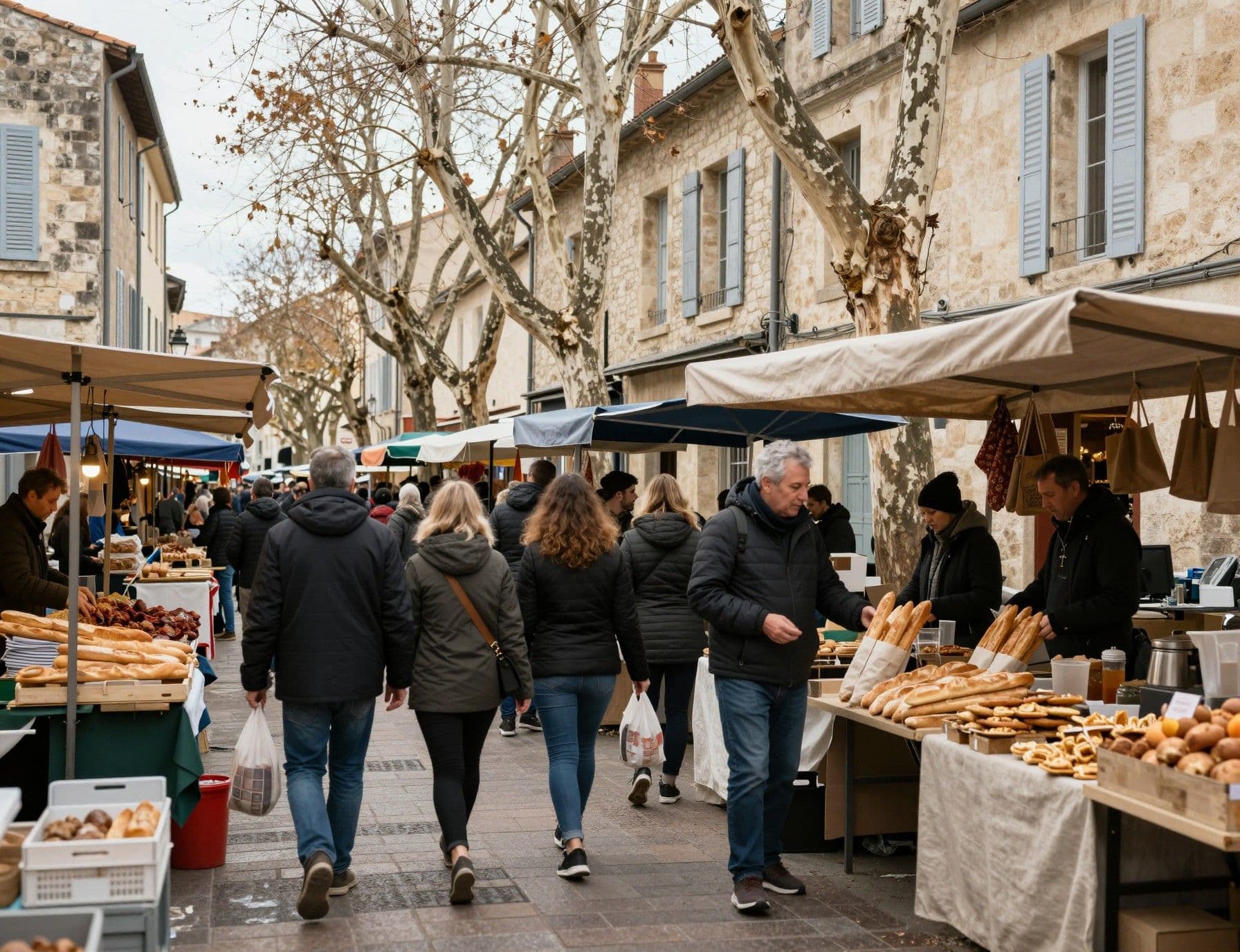
Markets, boulangeries and midweek cultural programming matter more for tenant retention than sea views. France welcomed record tourist numbers in recent seasons, but visitor flows concentrate risk into summer months and events. International tourism growth supports short‑let strategies in hotspots, yet long‑term rental markets are driven by local amenities — schools, healthcare and weekly markets — that create tenancies lasting years, not weeks.
- Cours Julien (Marseille) — creative scene, steady mid‑term demand
- Île de Ré villages — high price per m², seasonal short‑let volatility
- Lille near universities — student demand peaks in September, stable yearly cashflow
- Annecy & Alpine towns — winter seasonality balanced by year‑round outdoor economy
Making the Move: Practical Considerations and Risk Tests
Dreams meet contracts at the notaire’s desk, and market data should shape deal structure. Notaires de France reported a recovery in transactions across many departments recently, but the strength varies by city and by property type. Translate regional volume and price trends into scenario tests: what happens to rent and occupancy if tourism drops 20% in a coastal town, or if mortgage rates move 150 basis points? Build a sensitivity table and stress each cashflow assumption against real regional indicators.
Property types and how they respond to shocks
Older stone village houses often need higher capex for maintenance but attract long‑term family tenants willing to sign multi‑year leases. Conversely, modern seafront apartments deliver low immediate capex but face sharp occupancy swings. For each type, run three scenarios — optimistic, base, downside — and quantify net yield after management, maintenance and a stress vacancy assumption (commonly +3–6 months vacancy in downside scenarios for seasonal markets).
Local agents and specialists you actually need
Hire a notaire experienced in non‑resident purchases, a lettings manager who handles winterisation and seasonal turnovers, and an accountant familiar with French non‑resident taxation. Agencies that only list properties won’t protect yield; seek operators that provide historical occupancy data, utility cost histories and tenant profiles. Their local knowledge helps model downside risks — for example, whether a commune enforces short‑let registration rules that cap revenue potential.
- Gather three years of rental records, inspect seasonal occupancy variation, and model a five‑year cashflow with a downside vacancy of 20%.
- Run sensitivity analysis on financing: recompute net yield with +100bps and +200bps interest rate shocks and a 10% decrease in achievable rent.
- Test exit scenarios: estimate capital growth under stagnation, 10% decline and 10% appreciation over five years; include transaction costs and possible tax on gains for non‑residents.
Insider Knowledge: What Expats Wish They’d Known
Expats often romanticise coastal summers and Parisian terraces, then discover the real value lies in how a place functions 10 months a year. Banque de France and tourism receipts data confirm that tourism propels local economies, but rental resilience comes from local employment, connectivity and public services. The sharp lesson: buy where lifestyle aligns with economic fundamentals, not only where Instagram posts peak.
Cultural integration and practical daily life
French social rhythms — strong municipal services, a preference for local commerce, and administrative formality — affect tenancy and maintenance expectations. Simple steps like learning basic French, registering with the mairie and understanding waste collection schedules materially reduce operating headaches. Landlords who respect local norms retain tenants longer and lower turnover costs.
Long‑term lifestyle and portfolio fit
Think of French property as a diversifier: low correlation with some global asset classes, stable legal protections for owners, but localised political and tax changes can reprice yields. Rather than putting all capital into a single Riviera villa, a balanced approach blends university towns, secondary cities and selected coastal assets to spread seasonality risk. Over time, that mix smooths net yields and preserves lifestyle optionality.
- Diversify by geography: combine one Alpine/ski town, one university city, one secondary coastal town.
- Match renovation budgets to expected hold period: heavy capex only if holding 7+ years.
- Use local managers who report monthly occupancy and utility outlays — don’t accept annual summaries only.
Conclusion: France rewards buyers who see past glossy summers and test for downside. Treat the lifestyle as guide, not guarantee; build scenario tables that stress seasonal vacancy, interest‑rate shifts and regulatory riffs, and prioritise micro‑locations with structural tenant demand. When you combine sensory knowledge of place — markets, cafés, weekly rhythms — with disciplined sensitivity analysis, you own both the dream and a defensible yield. If you’re ready to move from curiosity to modelling, ask an agency for three years of verified occupancy and utility data before making an offer.
The YieldistDanish relocation specialist who moved to Cyprus in 2018, helping Nordic clients diversify with rental yields and residency considerations.
Related Articles
More insights that might interest you

 Villa Curated
 The Yieldist
 Moss & Hearth

